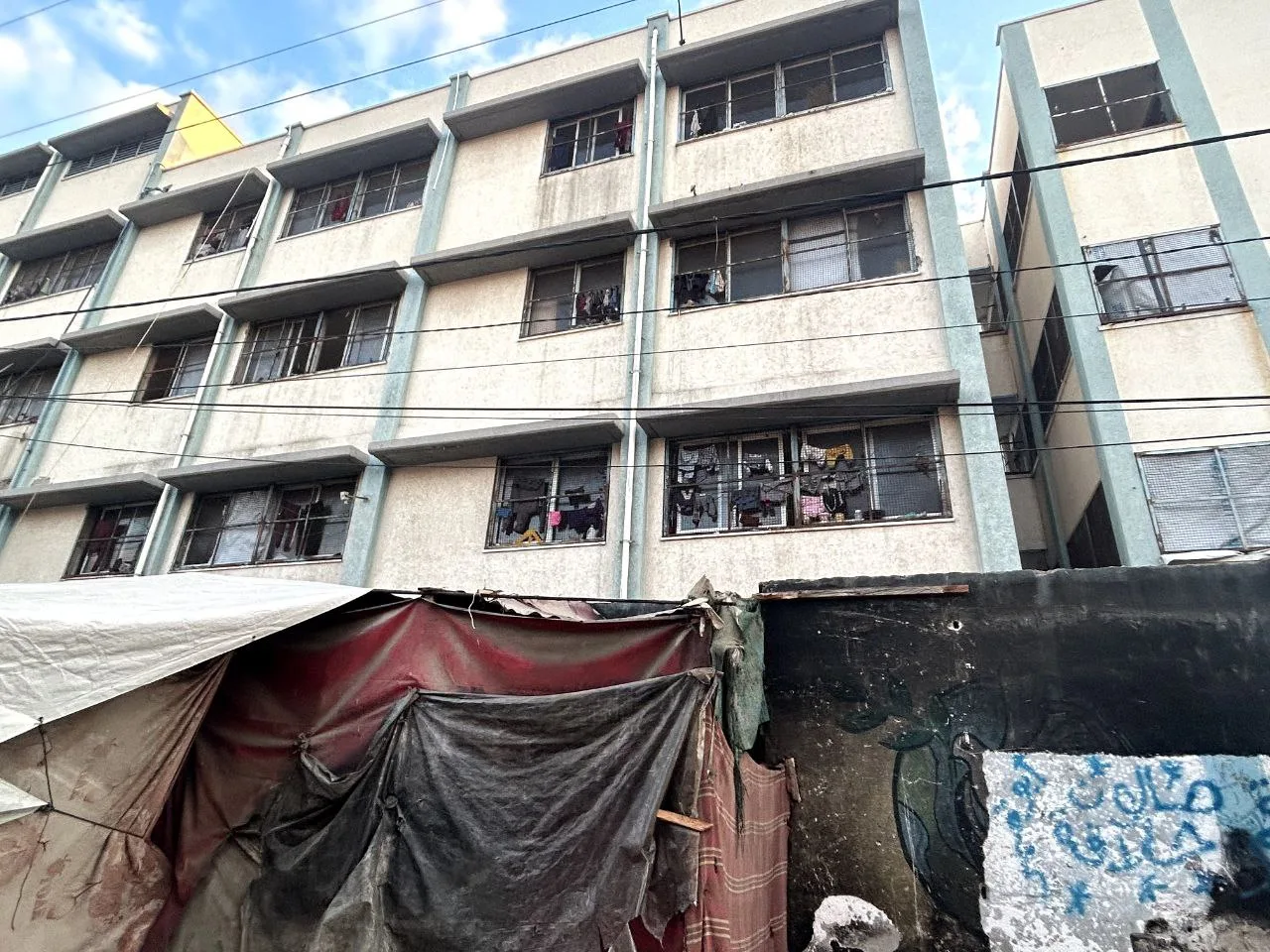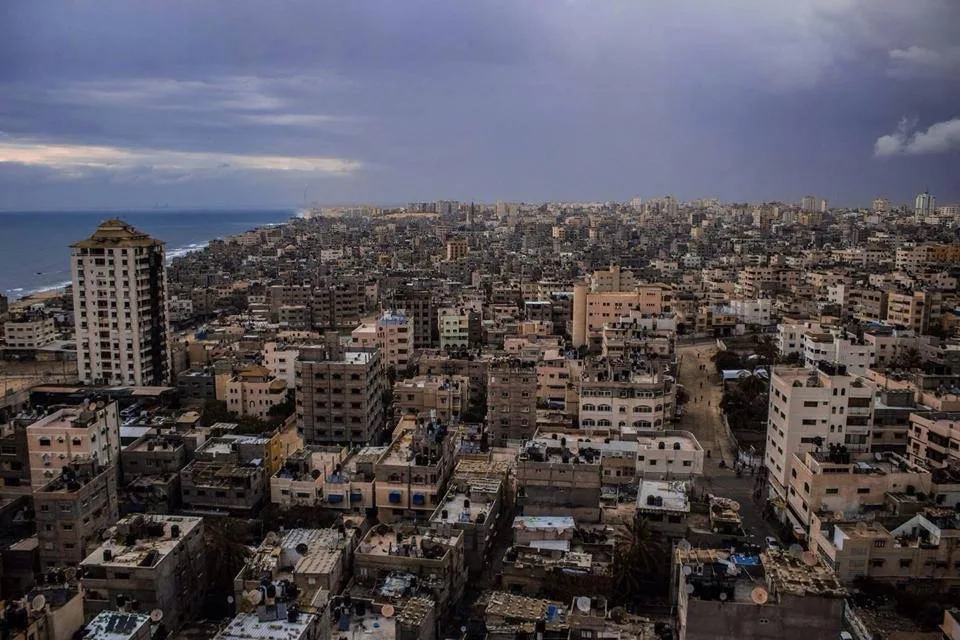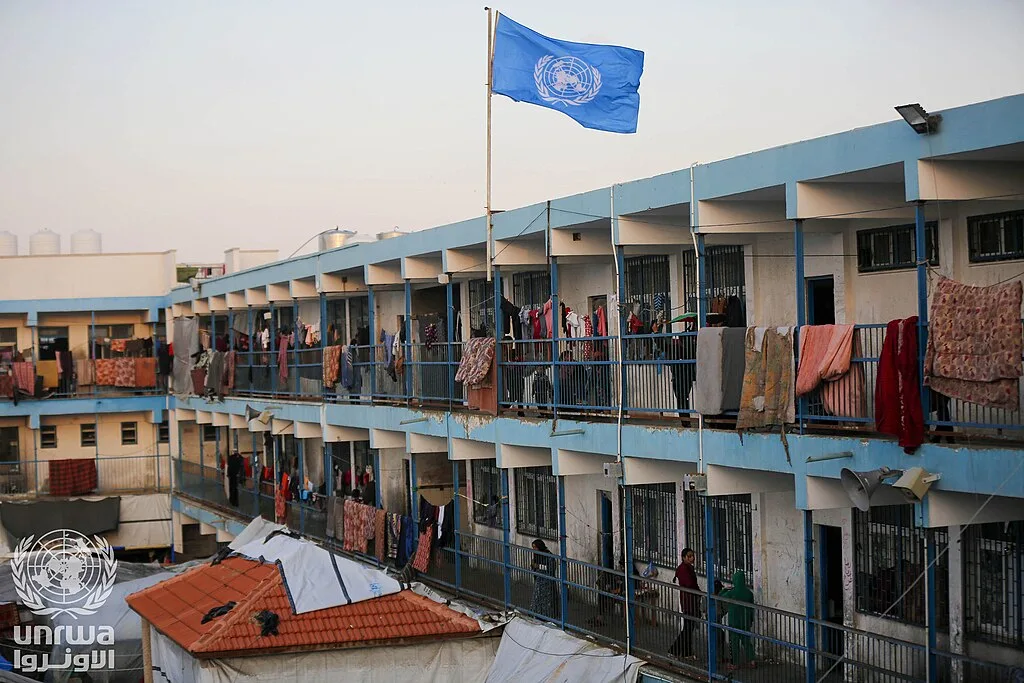
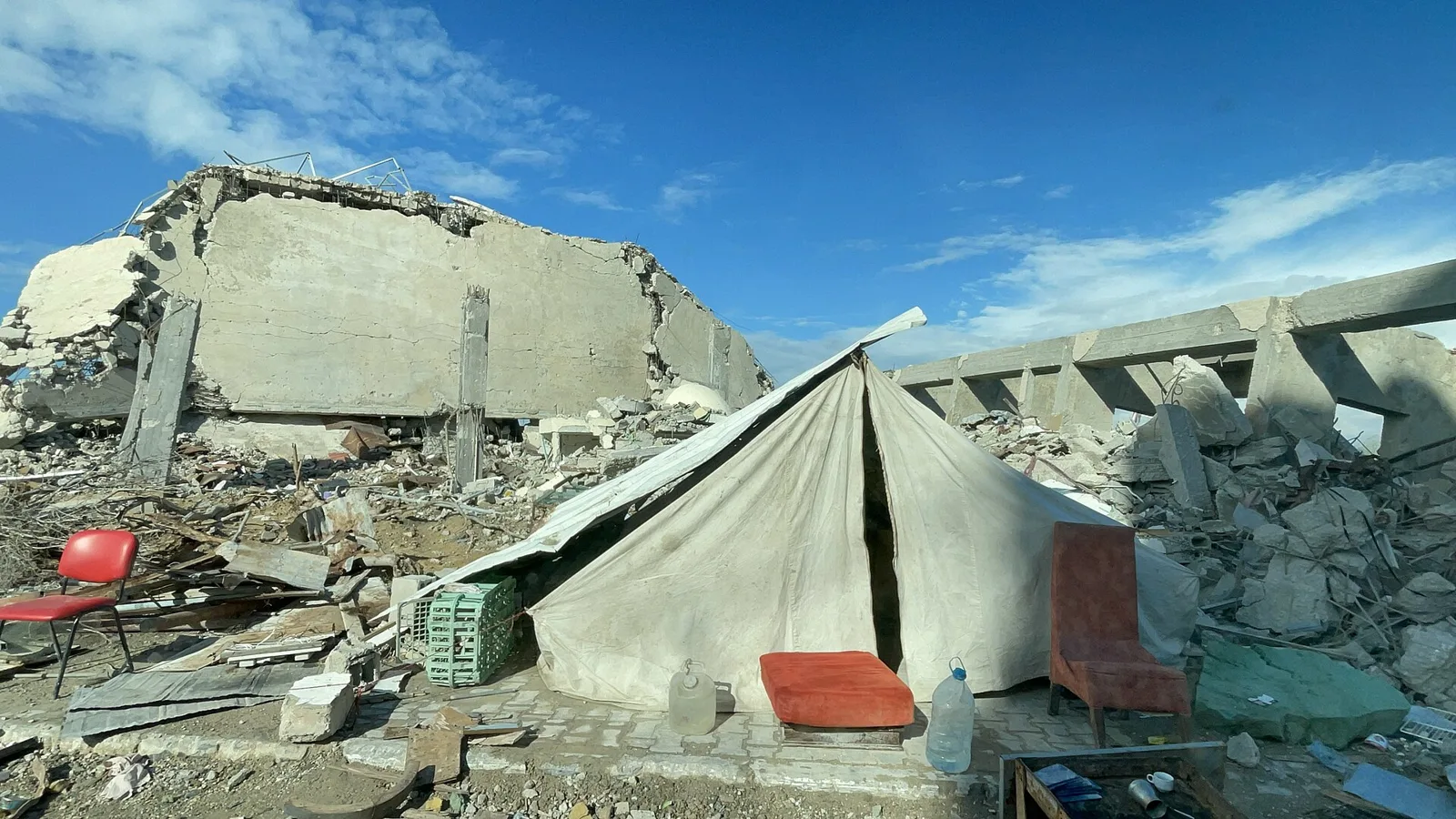
Gaza winter supplies exist — more than 150,000 tents' worth of them — and they are sitting outside the territory while the people they are meant for sleep in flooded canvas: the UN and its humanitarian partners issued an urgent appeal on Friday saying the deadly rainstorm's toll was "preventable," caused "not by the storm alone, but by policy decisions." The same week, in Khan Younis, a nine-month-old boy died of cold in his family's tent. This is the shelter crisis this site tracked as the storms arrived — in the Gaza winter shelter crisis and the aid-dispute reporting — now measured by the UN in a single damning inventory: 150,000 tents waiting outside, families sleeping in flooded canvas inside, and the gate is the policy.
What exactly did the UN appeal say?
That the plan existed, the supplies exist, and the entry does not. The Humanitarian Country Team in the Occupied Palestinian Territory — the heads of UN agencies and international and local NGOs working in Gaza — recalled that several months ago it had presented a winter plan: shelter, health and protection services, drainage and sandbag reinforcement, and a list of supplies that need to enter, from tents, warm clothes and blankets to water-pumping equipment, debris removal and explosive-ordnance clearing. The plan spelled out the need for funding, expedited entry and access to higher ground. What happened instead, the statement said, is that "Israeli policies continue to obstruct the entry of critical items as well as access to most of Gaza's land, including areas away from the shoreline that are less prone to flooding," and that incoming supplies "face multiple approval requirements, limited crossing capacity and unpredictable or narrow delivery windows that delay their entry." The team's central figure deserves to be quoted exactly: "although funding has fallen far short of what is needed," more than 150,000 tents are currently outside Gaza waiting to be dispatched — while every rainstorm inside destroys more of the tents already there. "Winter will last for months," the statement said. "Access to longer-lasting shelter must not be made conditional on political progress when people's needs are so urgent." It called on Israel to expedite entry, lift restrictions and enable repair of water and wastewater networks, and underlined Israel's obligation as the Occupying Power to ensure supplies essential for survival.
Who has the cold already killed?
A baby, in the south, in a tent — the precise death the winter plan was written to prevent. Nine-month-old Kinan Ahmed Raqiq "died from hypothermia" in Khan Younis, a doctor told the AFP news agency on Thursday, in Al Jazeera's report. His father, Ahmed Raqiq, told AFP: "I woke up only to see his skin had turned blue so I rushed him to Nasser Hospital, but he had already died from hypothermia and frozen to death." Gaza's Civil Defence spokesman, Mahmoud Basal, confirmed the infant's death after exposure to extreme cold, the Palestinian network Al-Quds reported. Kinan was not the storm's only child victim: five people, including three children, died when a sandy embankment eroded and collapsed onto flooded tents, Al Jazeera reported — a toll carried by that single reporting chain, with no independent second count in the sources opened — and OCHA counted 26,000 households affected by the storms as of November 8, with around 65 percent of Gaza's people still living displaced in tents or other temporary shelter. UNICEF's spokesman on Gaza, James Elder, warned that this is only the front edge of the season: "It's very important to know how bad things are in Gaza. It's not yet winter. We're weeks away from winter, so we are getting unprecedented rain and cold." Cold and rain, overcrowding, deteriorating shelters and broken water and sanitation have also created a high disease-transmission environment across Gaza, UN News reported — the conditions under which exposure deaths multiply.
What does Israel say — and what happens next?
That supplies have entered, and that Hamas bears the blame. Responding to criticism from the US-led Board of Peace, Israeli caretaker Prime Minister Benjamin Netanyahu said Israel had allowed in supplies including 91,000 tents and that "Hamas alone is responsible for the suffering of the people of Gaza," Al Jazeera reported. The pressure is no longer only the UN's: the United Kingdom, Qatar and Jordan led a coalition of more than 50 countries and organisations calling on Israel to provide immediate entry of critical items for shelter, fuel, water, sanitation and health, Al Jazeera reported, warning that "far too many people in Gaza are still without adequate shelter, and risk exposure to hypothermia, respiratory infections, waterborne diseases and other preventable illnesses." The two numbers — 91,000 tents Israel says entered, 150,000 tents the UN says still wait outside — are not reconciled in the reporting opened, and both are carried here as their makers stated them. What is not in dispute, in any account opened, is the denominator: roughly two-thirds of Gaza's population is living under canvas or makeshift cover as winter arrives, the in-territory stock is being destroyed faster than it is replaced, and the UN's verdict on the first storm of the season is already written — preventable. "Winter supplies must reach families immediately to prevent further loss of life and protect their dignity," the appeal concluded. "People cannot wait."
Sources: UN News (13 November 2026, read in full at news.un.org), reporting the Humanitarian Country Team's statement of Friday 13 November; and Al Jazeera (12 November 2026, read in full via the Barbados Gazette verbatim carrier), whose account of Kinan Ahmed Raqiq's death rests on AFP reporting — the father's account and a doctor's statement given to AFP, with Civil Defence confirmation via Al-Quds — and whose OCHA figures (26,000 households affected as of November 8; around 65 percent in tents or temporary shelter) are the UN's own. The Gaza editorial directive applies to this article: the framing follows the victims' side, per the owner's order of 2026-10-16, while every fact above is attributed to the opened source that carried it. Israel's position is carried in full from the same reporting: Netanyahu's 91,000-tents figure and his attribution of responsibility to Hamas. The 91,000 and 150,000 tent figures come from opposing parties to the dispute and are not reconciled in the sources opened.